Phones answered 24/7Titusville, FL
Call (855) 974-4733
Serving Brevard County

Roof rat control for Titusville attics, soffits and rooflines

Control for a rat that lives high: the attic, the soffit, the wall void and the overhead route it uses to reach them from trees and power lines.

  • Phones answered 24/7
  • Saltmarsh mosquitoes and fire ants
  • Roof rats and drywood termites

Get a fast quote

Fastest: call (855) 974-4733. Or send this and we call you back.

Roof Rat

Roof Rat Control: what it covers

Quick answer

Roof rat control in Titusville is aimed at the high routes and the upper nest sites this species prefers. A local technician checks attics, soffits, vent openings, tree limbs touching the roofline and overhead wire crossings, then combines trapping or bait placement with the exclusion work that keeps new rats from moving in once the first ones are removed.

Roof Rat Control illustration for Titusville, FL

The roof rat is built for climbing. It runs along fence tops, power lines, palm fronds and tree limbs, and it prefers to nest well above the ground, in the attic, inside a soffit or in the hollow space of a wall. A homeowner who sets traps only at floor level often catches the rat that comes down to feed and misses the rest of the population above.

The University of Florida's extension researchers describe the roof rat as the most abundant and damaging rodent in the state. It is a long, slender animal with a tail longer than its body, and it can squeeze through an opening about half an inch across. That combination makes it hard to keep out of a house that has even a small gap at the eave, a vent with a torn screen, or a palm trunk growing against the roof.

Its diet is what brings it in. Roof rats eat fruit, seeds, pet food, birdseed and the contents of open trash, and they will chew into stored food and wiring if they are not disturbed. A rat that has found a reliable meal near a house will keep returning to it, and the signs of that routine usually show up first in the attic and the garage.

Service area
Titusville & Brevard County
Availability
Phones answered 24/7
Warning signs

Signs you need roof rat control

Rodenticides and bait stations must be used exactly as the label directs, and they should be kept away from children, pets and wildlife that can reach them. Dead rats should be removed with gloves and sealed in a bag for disposal, and the attic should be ventilated before anyone works in it for a long time. Do not handle live rats without a plan for the animal, and ask the technician for label and disposal directions in writing.

  • Scratching, thumping or scurrying in the attic or the wall void, mostly after dark
  • Dark droppings, shaped like grains of rice, on rafters, in insulation or in the garage
  • Gnawed fruit or nut shells beneath a tree, on a patio or on the roof edge
  • Greasy rub marks along a wall or pipe, which show a regular route
  • Gaps at the soffit, the gable vent or the eave where a rat could push through
  • Odor in the attic, especially near a corner that gets little air
  • Fresh chewing on wiring insulation, a pipe wrap or the edge of a wooden fascia
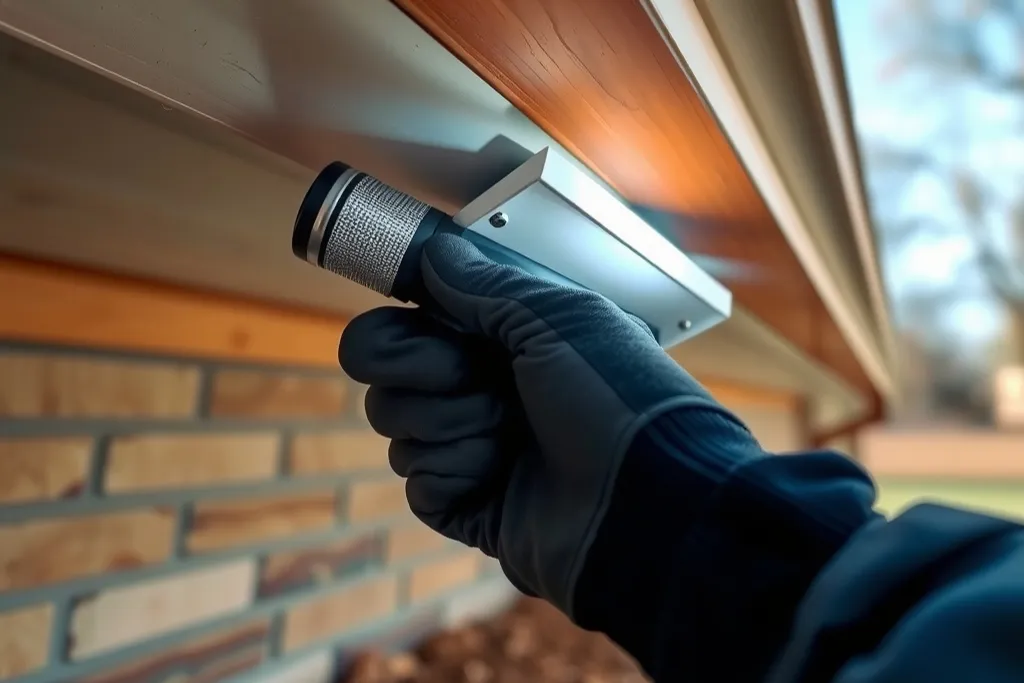
A gloved hand holding a flashlight to a soffit vent at the eave of a block house.
An illustration of an inspection at the roof line, where openings are counted.Generated illustration of a Brevard County house and yard of the kind described on this site. It is not a photograph of a job this company has completed.
Our process

How our roof rat control visit works

  1. Listening to where the sounds come from

    The first call is about timing and location. A technician asks whether the activity is in the attic, the walls or the garage, and whether it happens at night only. Roof rats are nocturnal, so the hours of activity help place the nest and suggest which route the animals use to reach the house.

  2. Working the upper structure

    The inspection starts at the top of the building: the roofline from the ground, the soffit and fascia, gable and ridge vents, the eave where the roof meets the wall, and any tree limb that touches the roof. The attic is checked from the hatch with a light, looking for droppings, nesting material, runs along the framing and gnawed insulation.

  3. Mapping the overhead route

    Roof rats travel along branches, fences and wires, so the technician notes every overhead connection to the structure: palms, oaks, power and phone lines, and any crossing where a rat could step from one to the house. Those routes often explain why one side of a home has the problem and the other side does not.

  4. Trapping, bait and exclusion together

    Traps or bait stations are placed where the runways and nest sites were found, set according to the label and the animal's habits. Exclusion work is scheduled alongside the trapping, so new rats cannot move in after the first ones are removed. The homeowner is told which openings are being sealed and which must be cleared by a contractor.

  5. Checking results and closing the routes

    A return visit reads the traps and bait stations and checks the attic again. If activity has stopped, the plan moves to monitoring. If it has not, the technician reviews the routes and the placement and adjusts both. Rats that are still moving in signal an opening that was missed, not a failed visit.

Job stories

Typical jobs for roof rat control

Typical job
Illustration: Typical call: scratching in an attic on an older block house downtown

Typical call: scratching in an attic on an older block house downtown

What homeowners notice
A household hears movement in the ceiling after dark and then finds droppings on top of the attic insulation near the eave. A palm frond rests against the roof on the same side of the house.
What we do
The technician walks the roof line first, notes a soffit gap where the fascia meets the block wall and a vent without a proper screen, and records the frond as a route to trim. Animals already in the attic are removed by trapping before the openings are closed, so none are sealed inside.
What to expect
The written report lists each opening, which were closed on the visit, which need carpentry from another trade and a monitoring period to confirm that activity has stopped.

depends on how many openings the walk finds typical visit

Why roof rats choose the upper floors

The roof rat prefers elevated nests and runs. It is a climber with a long tail and a light body, and it uses the same high routes that keep it safe from predators on the ground.

A roof rat will nest in a palm crown, a dense shrub, a bird box or the attic of a house, depending on what is available. The attic is attractive because it is warm, dry, quiet and close to food. Once a nest is established there, the population can grow quietly for weeks before the first sound reaches a homeowner.

Because the animal moves overhead, a house with a single rat in the attic may have a route that touches several trees and wires. Looking only at the floor or the garage misses that route, and it is why the inspection begins at the roofline.

Trapping and bait placement for elevated runs

Traps and bait stations work best when they sit on the runway the rats use, not in a random corner. A technician places them along the framing, the top of the wall plate and the edge of the roof where the animals travel.

Snap traps, multi-catch devices and bait stations each have a place in a roof rat plan. The technician chooses based on the layout of the attic, the presence of children or pets, and the food sources nearby. All placements follow the label, and bait is kept in a secured station so that other animals cannot reach it.

Trap checks are part of the work. Dead rats are removed, the trap is reset or replaced, and the location is recorded so the next visit can compare it with the last one. A trap that catches nothing for two checks is moved, because the animal has found another way around it.

Soffit, vent and eave exclusion

Exclusion is what keeps a roof rat out after the first population is removed. The openings it uses are usually small, and they are often hidden under the eave, behind a vent or where two materials meet.

Soffit vents with torn or missing screens, gable vents without mesh, and gaps where the fascia meets the roof are the most common routes into the attic. A technician checks each opening with a flashlight and notes the ones large enough for a rat to pass.

Repairs use materials that rats cannot chew through, such as metal mesh or hardware cloth fixed firmly to the framing. Foam alone is not enough, because the animal can chew it. Where a tree limb touches the roof, the limb is cut back by a qualified arborist, since a rat that can step onto the shingles can reach the attic in seconds.

Keeping the yard from feeding the rats

A roof rat that finds fruit, seed and pet food near the house will return to it. Removing those sources is part of the control, and a technician will say which changes matter most for the property.

Fallen fruit should be picked up daily during the season when it drops, and fruit left on trees should be harvested before it ripens and falls. Birdseed spilled below a feeder attracts rats at night, and the feeder can be moved or fitted with a catch tray. Pet food should be stored in a sealed container and not left out after dark.

Trash cans with tight lids and secure bins keep the nightly meal from being easy to reach. The technician will look at the yard layout and suggest where the attraction is greatest, so the homeowner can focus effort on the few changes that will matter most.

Options

Types and options for roof rat control

Attic activity

Scratching and droppings in the roof space with a clear route from a tree or wire. The work concentrates on the attic, the soffit openings and the overhead connection, with trapping placed in the attic as well as at the eaves.

Wall and garage activity

Sounds inside a wall or droppings in the garage that suggest a rat is using a gap at the foundation or a utility penetration. The inspection focuses on the lower structure and the wall void that connects it to the upper floors.

Fruit tree and yard feeding

Gnawed fruit on the ground or on the roof edge points to a rat feeding in the trees. The plan includes removing fallen fruit and clearing limbs that touch the building, along with trapping placed where the rats come down to feed.

Brevard County

Why roof rat control is different in the Space Coast

Roof rats are reported across the coastal and inland parts of the state, and the University of Florida's extension service names the species as the state's most abundant and damaging rodent. Titusville's older downtown blocks, with their attics and soffits, give the species the kind of nesting site it prefers.

Palms, citrus and mixed backyard trees are common across north Brevard, and each one can carry a rat from the yard to the roofline. On lots near the grove land around Mims, fruit trees are worth checking early, because fallen fruit is one of the foods roof rats are known to use.

Rats that nest in attics are most active at night and in the cooler months, when they are searching for warmth and food. The attic inspection is often the most useful part of the visit, because the nest and the runs there show how long the activity has been going on.

Need roof rat control today?

Call any hour and explain what is going on. You get a clear price before any work starts.

Related

Rodent Exclusion and Sealing

Sealing and exclusion work that finds every gap a mouse or rat can pass, closes it with materials rodents cannot chew, and checks the result.

Cockroach and Palmetto Bug Control

Control for roaches that hide by day in drains, motors, cabinets and wall voids, with the work aimed at harborage, moisture and the food that keeps the population growing.

Wildlife and Snake Exclusion

Exclusion for raccoons, bats, opossums and snakes that use attics, crawl spaces and sheds, with entry points closed after the animals are safely out and the timing of the work planned around young.

Guides

Read before you book

FAQ

Roof Rat Control FAQs

Why do I hear rats in the attic but never see them?

Roof rats are nocturnal and quiet when they move through framing and insulation. Sounds after dark are typical, and a technician can usually find the routes and droppings that prove the animals are present even if none are seen.

Are roof rats the same as Norway rats?

No. The roof rat is slender, with a tail longer than its body, and it lives higher in buildings and trees. The Norway rat is heavier and prefers to burrow near the ground. The difference matters because it changes where the traps go and where the openings must be sealed.

How many young can a roof rat have?

University of Florida extension sources describe roof rat litters of about five to eight young, with a gestation of roughly three weeks. Because the females breed several times a year, a small population can grow quickly if the nest is left alone.

Will sealing the soffit alone solve the problem?

It can reduce new entry, but it does not remove rats already inside. The usual plan is removal first, then sealing, so the animals are not trapped in the walls or attic behind a new barrier that they cannot leave.

Can rats damage the house beyond the droppings?

Yes. Rats gnaw on wiring, insulation, pipe wrap and wood, and they can chew through plastic and soft metal. The gnawing is a fire and water concern as well as a hygiene one, which is why the technician looks at the wiring path in the attic.

Do I need to be home for the trapping?

The technician may ask for access to the attic, the garage and the yard at several points. You do not need to be present for every trap check, but someone should be available for the first visit and the exclusion work, so questions can be answered on the spot.

WhatsApp